Call or text
(223) 264-1537
Decorative & Venetian plaster
Serving the Main Line, Chester & Lancaster County, PA

Call or text
(223) 264-1537
Decorative & Venetian plaster
Serving the Main Line, Chester & Lancaster County, PA
Seamless, contemporary concrete-look surfaces for walls, floors, showers and countertops — only 2–3 mm thick, fully waterproof when sealed. Installed across the Main Line, Chester County and Lancaster, PA.
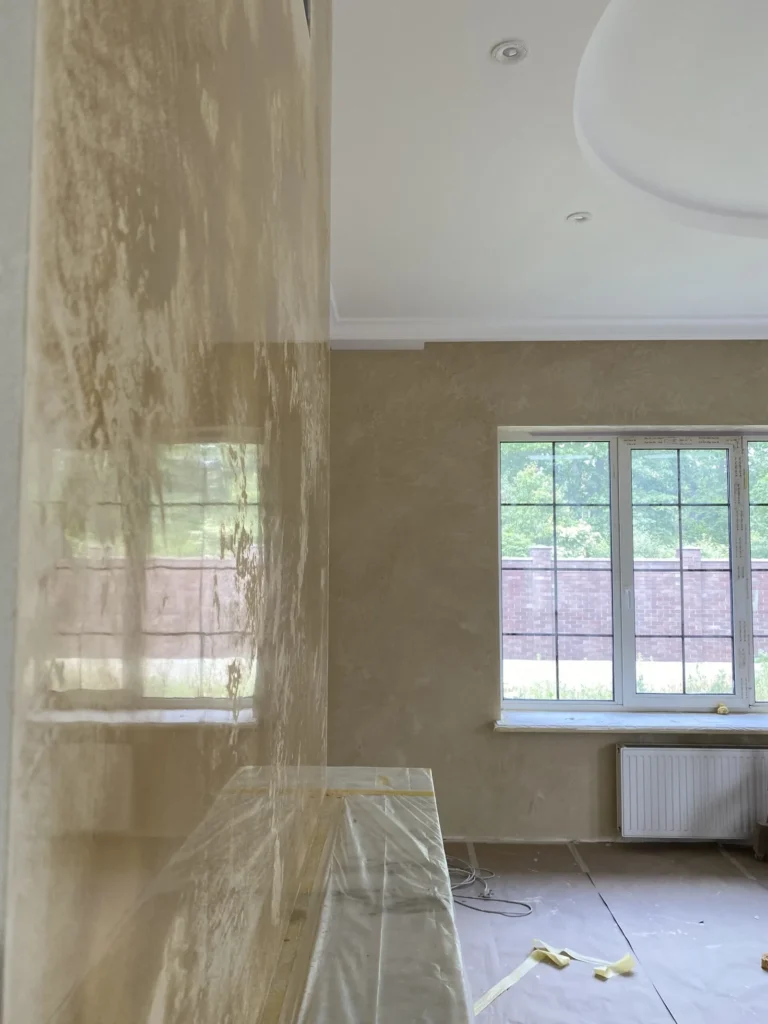
Microcement (also called microtopping or micro-concrete) is a thin, cement-and-polymer coating applied by hand in layers just two to three millimetres thick. Despite that slim profile it bonds to almost any sound surface — existing tile, drywall, concrete, plywood, even old countertops — to create a single, seamless, joint-free surface with the warm, matte character of polished concrete.
Because it has no grout lines and can wrap continuously across walls, floors and built-in furniture, microcement is the go-to finish for modern, minimalist interiors and spa-like bathrooms. Once sealed with a polyurethane topcoat it becomes water-resistant, hard-wearing and easy to wipe clean.
A continuous, grout-free surface that is genuinely waterproof once sealed — the modern alternative to large-format tile.
Warm, seamless concrete-look floors that can run from room to room without thresholds or joints.
Wrap a wall, a vanity and a basin in one uninterrupted finish for a clean, architectural look.
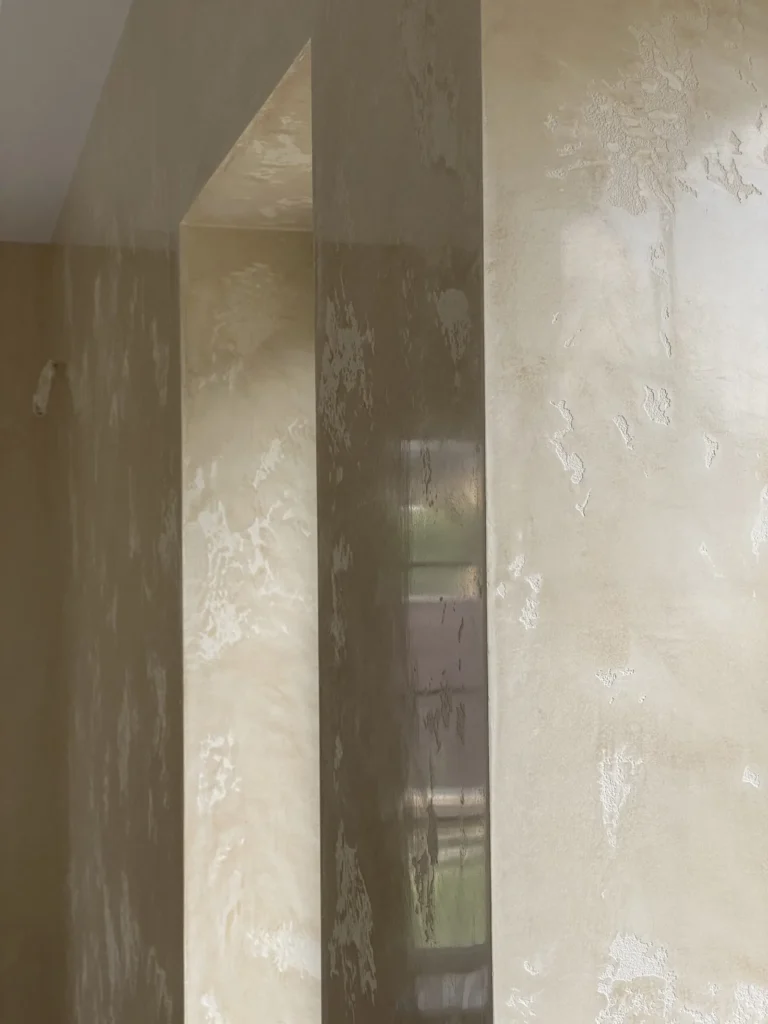
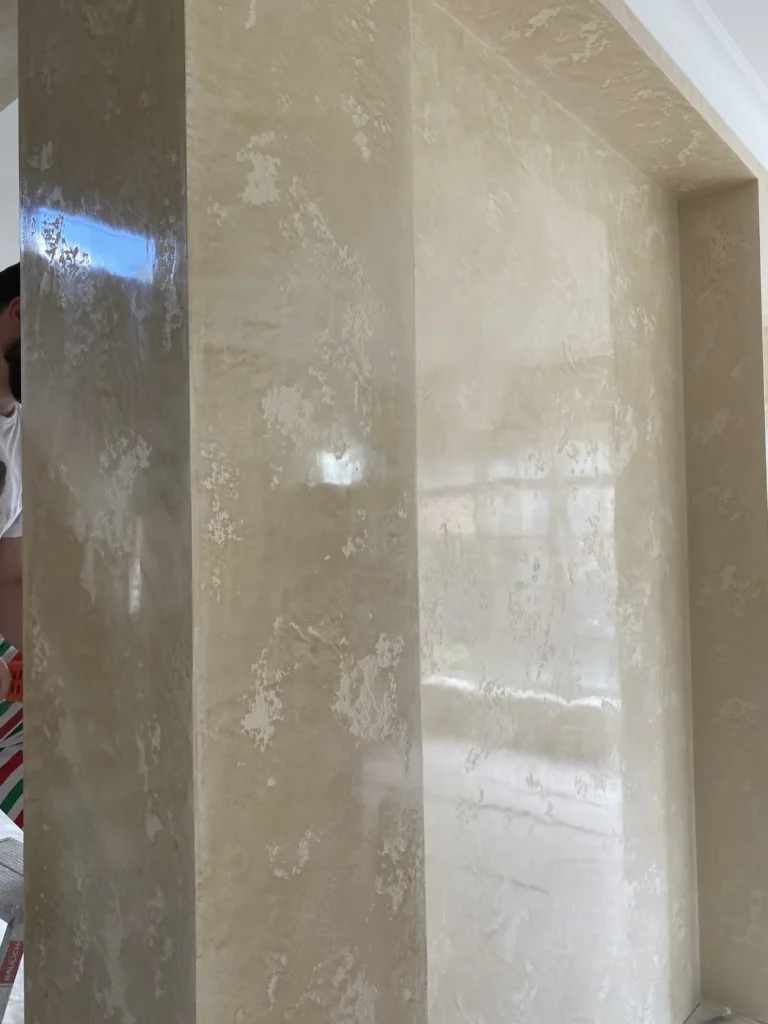
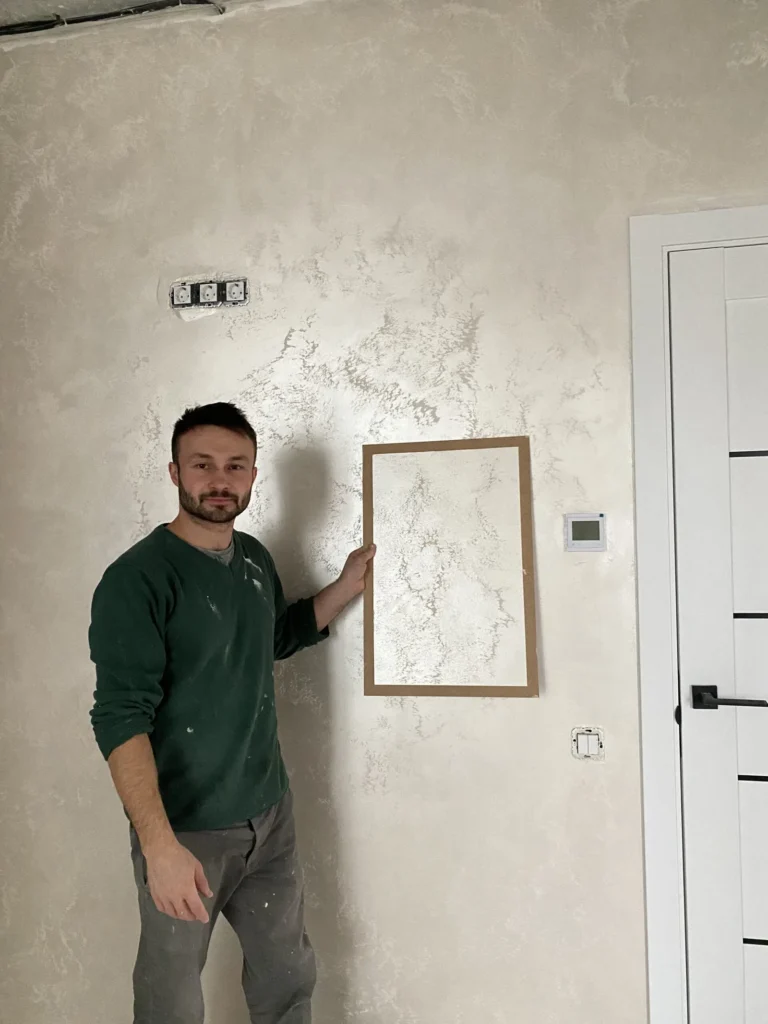
Microcement itself is water-resistant, and once it is sealed with a two-part polyurethane topcoat the system is fully waterproof — which is why it is widely used in showers, wet rooms and on bathroom floors. Correct sealing is essential, and it is exactly where professional installation matters.
Yes. As long as the existing tiles are sound and well bonded, we can prepare and coat directly over them. This avoids demolition, dust and the cost of ripping out the old surface.
For walls, microcement typically runs $25–$45 per square foot installed; floors and full bathrooms are usually higher because of the extra coats and sealing involved. We give a fixed quote after measuring the space.
Applied correctly over a stable, properly prepared substrate with the right reinforcing mesh, microcement resists cracking very well. Problems almost always trace back to a moving or poorly prepared base — which is why preparation is the bulk of our work.
Explore more finishes: Venetian · Marmorino · Microcement · Roman clay · Tadelakt · Lime wash · Metallic · Polished. Back to all decorative plaster.
Free consultations and detailed quotes across the Main Line, Chester County, and Lancaster, PA. Tell us about your space and we will recommend the right finish.