Call or text
(223) 264-1537
Decorative & Venetian plaster
Serving the Main Line, Chester & Lancaster County, PA

Call or text
(223) 264-1537
Decorative & Venetian plaster
Serving the Main Line, Chester & Lancaster County, PA
A soft, suede-like matte plaster with gentle tonal movement — the understated, modern face of decorative plaster. Hand-troweled across the Main Line, Chester County and Lancaster, PA.
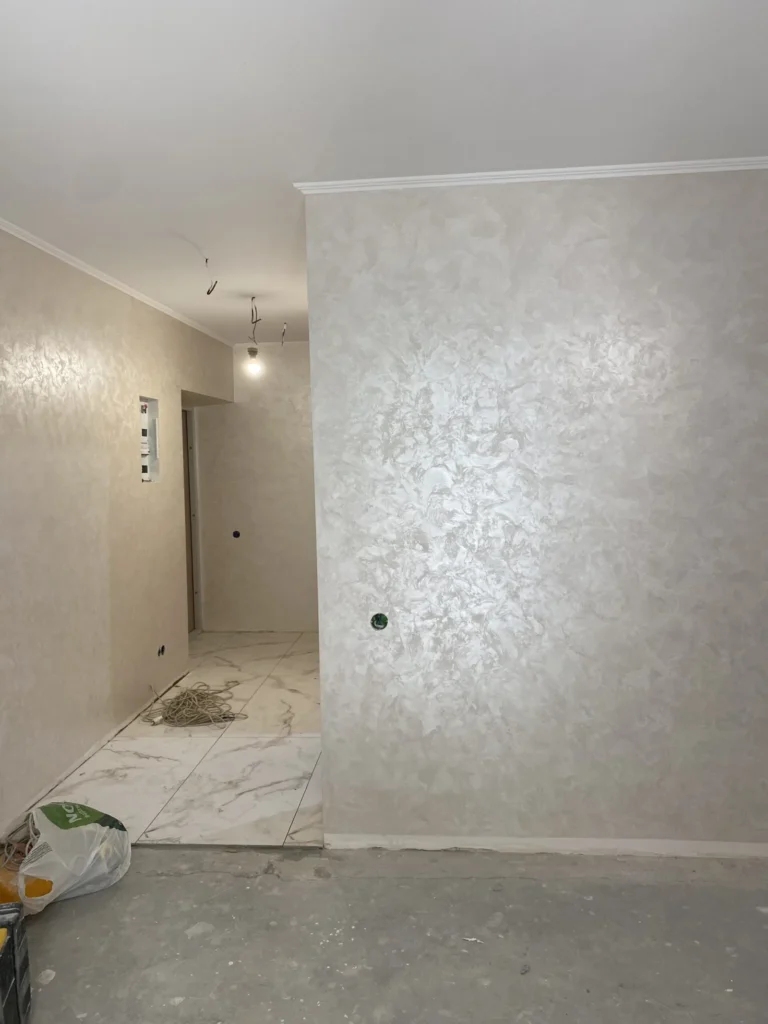
Roman clay is a smooth, lime-and-clay based plaster troweled on in thin coats to produce a soft, matte, suede-like surface. Unlike high-gloss Venetian plaster, Roman clay has no sheen — instead it carries quiet, cloudy tonal movement that reads as calm and contemporary. It is the finish behind so many of the warm, minimalist interiors filling design magazines today.
Because it is matte and forgiving, Roman clay is the ideal choice when you want the depth and hand-made character of plaster across a whole room — not just a single accent wall — without a reflective finish. It pairs beautifully with natural wood, linen and stone.
Its soft matte surface wraps a living room or bedroom in warmth without the drama of a polished finish.
A calm, low-VOC, breathable finish that makes restful spaces feel enveloping.
Roman clay on the “fifth wall” adds subtle depth that flat ceiling paint never will.
Venetian plaster is burnished to a polished, marble-like sheen; Roman clay is deliberately matte with a soft, suede-like surface. Venetian is the dramatic statement finish, Roman clay is the calm, contemporary one. Many homes use Venetian on a feature wall and Roman clay across the rest.
Yes — it cures to a hard mineral surface. For high-traffic or hand-touched areas like hallways we can apply a matte sealer to make it more washable while keeping the flat look.
Roman clay typically runs $9–$18 per square foot installed, making it one of the more accessible ways to get a true plaster finish across a whole room.
On bathroom walls away from direct water, yes, with a suitable sealer. For shower interiors and wet zones we recommend Tadelakt or microcement instead.
Explore more finishes: Venetian · Marmorino · Microcement · Roman clay · Tadelakt · Lime wash · Metallic · Polished. Back to all decorative plaster.
Free consultations and detailed quotes across the Main Line, Chester County, and Lancaster, PA. Tell us about your space and we will recommend the right finish.