Call or text
(223) 264-1537
Decorative & Venetian plaster
Serving the Main Line, Chester & Lancaster County, PA

Call or text
(223) 264-1537
Decorative & Venetian plaster
Serving the Main Line, Chester & Lancaster County, PA
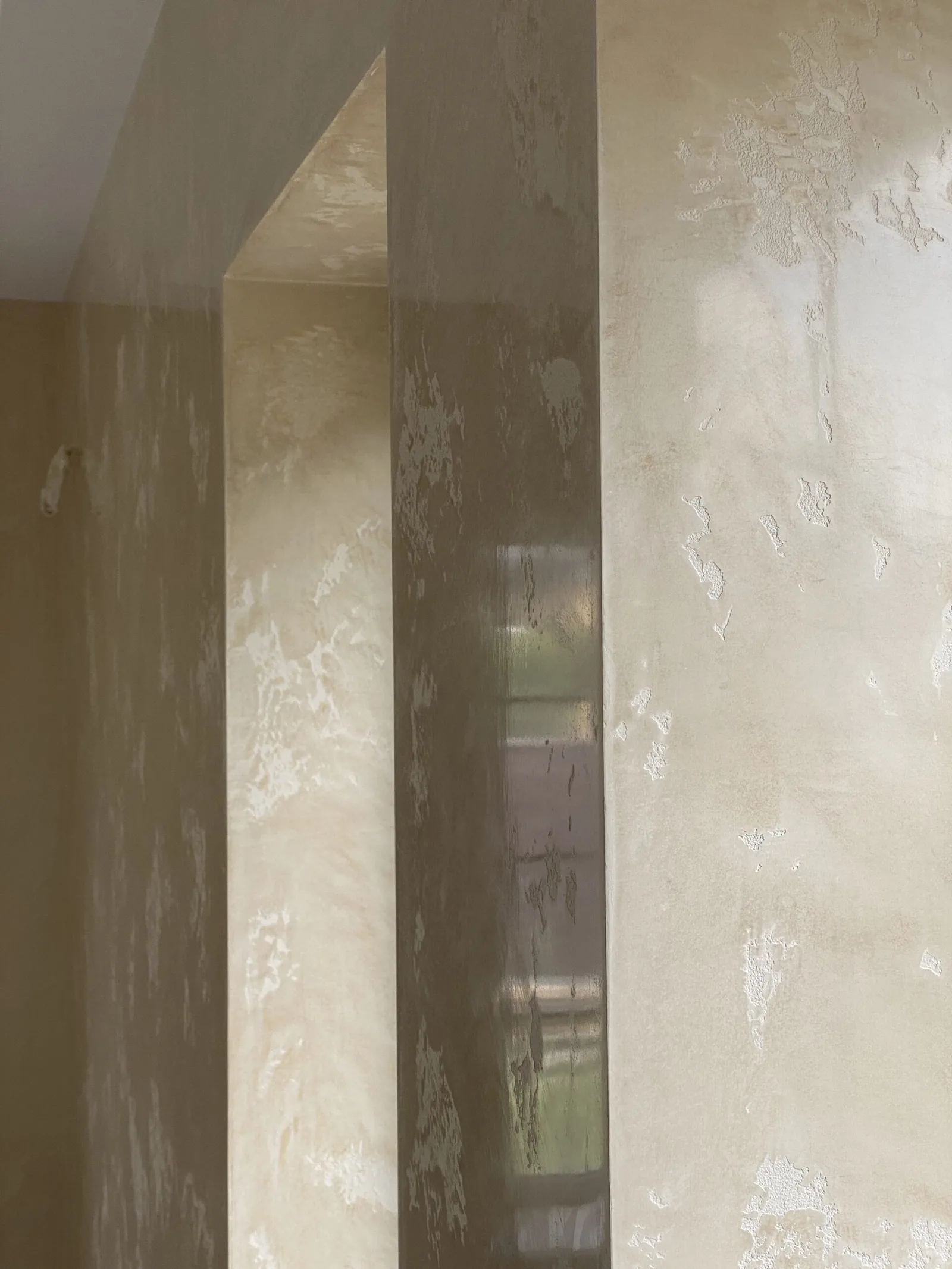
Limewash vs Roman clay: a brushed mineral wash versus a troweled matte plaster — which suits your walls.
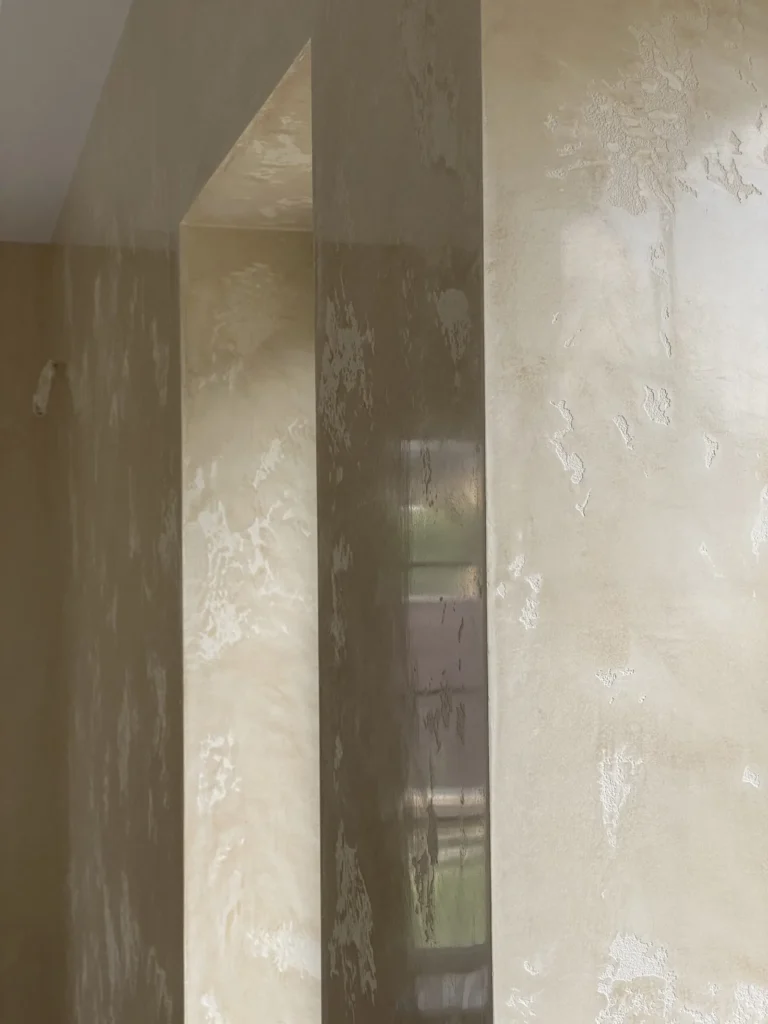
Limewash and Roman clay both give soft, matte, mineral walls — but one is a thin wash and the other a troweled plaster. The difference shows up in texture, depth and where each works best. Here is how to tell them apart.
Limewash is a thin, brushed-on lime paint that soaks into porous surfaces and dries to a chalky, cloudy finish — it follows and reveals the texture beneath, which is why it is magic on brick and stone. Roman clay is a troweled plaster that builds a smooth, suede-like surface of its own with subtle tonal movement.
Limewash is the more affordable of the two (around $4–$10 per square foot), while Roman clay sits a little higher (around $9–$18) because it is troweled in coats. Your surface and the look you want usually make the choice for you.
Limewash, without question. It is designed to soak into and bond with porous masonry like brick and stone, softening the surface while letting the texture show through.
Roman clay. It is troweled into a smooth, even plaster surface, whereas limewash is a thin, cloudy wash that follows the texture underneath.
Yes. Both are mineral, lime-based finishes that let walls breathe, making them well suited to older masonry homes.
Ready to see these finishes in person? Explore Venetian plaster, microcement, Tadelakt, Marmorino and Roman clay on our decorative plaster page.
Free consultations and detailed quotes across the Main Line, Chester County, and Lancaster, PA. Tell us about your space and we will recommend the right finish.